
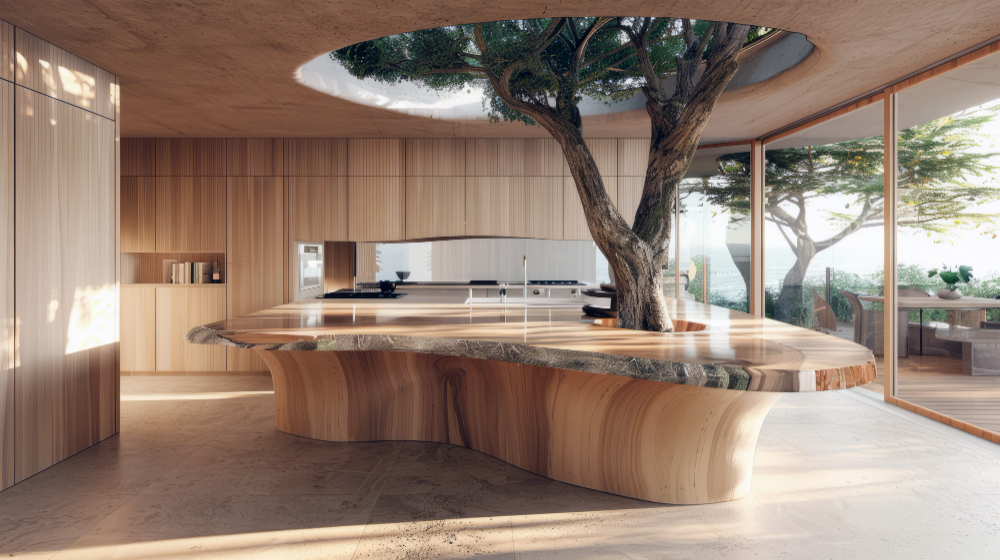
Every renovation has that moment — the one where you’re staring at half-demolished drywall, delivery delays, and a budget that somehow vanished overnight. That’s exactly where we were with the Jensen remodel.
It was a charming mid-century home with good bones, but the kitchen? Tight, dark, and oddly shaped. We were juggling limited space, mismatched cabinetry, and clients who weren’t interested in trendy finishes. They wanted something that felt grounded, real, and a little unexpected.
That’s when Acacia Veneer changed everything.
The Turning Point
We’d already ruled out the usual suspects — walnut was too dark, white oak too subtle, and maple too flat. But during a vendor walkthrough, we spotted a bookmatched Acacia Veneer slab, and the room went quiet.
The grain had movement. The tones were rich — deep browns, golden ambers, and creamy highlights. It had the warmth of walnut with the surprise of something more natural, almost wild. In short: it felt alive.
And that’s exactly what the kitchen needed.
If you’re exploring real-wood veneers with the same elevated feel, the SHINNOKI Series is a great benchmark for premium, natural-looking panels.
Why Acacia Veneer?
If you’re not familiar, Acacia Veneer is made from thin sheets of real acacia wood, applied to a stable substrate (like plywood or MDF). What you get is the look and feel of solid wood, but with more flexibility — and often, more affordability.
It’s:
-
Durable (acacia is harder than oak)
-
Naturally varied — every panel is unique
-
Sustainable — fast-growing and responsibly sourced
-
Low maintenance when sealed properly
And for kitchens? It offers character without going full rustic.
For a deeper comparison of high-end custom woodwork, guides like High End Custom Kitchen Cabinets offer helpful insight into how premium natural materials perform in real homes.
From Chaos to Cohesion
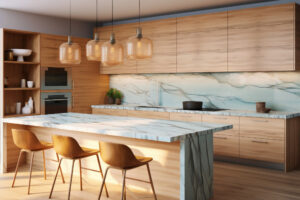
We ended up using Acacia Veneer flat-panel doors for the lower cabinetry, paired with soft white uppers and brushed brass hardware. The result? A perfect blend of drama and lightness. We even used the same veneer for a floating shelf and range hood panel to tie the room together.
The transformation was immediate. What once felt small and disjointed now felt intentional, even luxurious. Guests didn’t ask about the backsplash. They asked, “What wood is that?”
Homeowners looking for more real-project inspiration often browse the Kitchen Design Photo Gallery to see how natural textures elevate full kitchen designs.
“We thought we were just picking cabinets. Turns out, we found the soul of the whole kitchen.” – The homeowners
A Few Lessons from the Field
Don’t underestimate veneer
There’s a common misconception that veneer = cheap. But high-quality wood veneer, especially from real hardwood like acacia, offers beauty and durability that rivals solid wood — with added stability and design consistency.
Let the wood speak
Acacia’s bold grain is best shown off in slab doors, minimalist spaces, or with soft, neutral pairings that let the movement in the wood take center stage.
For more inspiration on letting natural wood textures shine, the DREAMLINE Shinnoki: Perfecting the Art of Custom Wood Cabinetry feature highlights how subtle grain movement transforms a room.
Seal smart
Use a low-sheen, water-resistant topcoat to protect the surface and preserve the wood’s natural tones. It’s easy to maintain and ages beautifully.
Final Thoughts
Every remodel has a pivot point — the decision that shifts the direction from “this might work” to “this works.” For the Jensens’ kitchen, Acacia Veneer was that pivot.
It added warmth, depth, and just enough visual interest to make the space feel custom — not overdone. That’s the kind of material I’ll recommend again and again.
For even more ideas on pairing textured woods with modern design, the Luxury Kitchen Cabinets Design guide explores how natural finishes elevate upscale kitchens.
Because in the world of cabinets, not every wood is created equal. But some — like acacia — just might surprise you.