
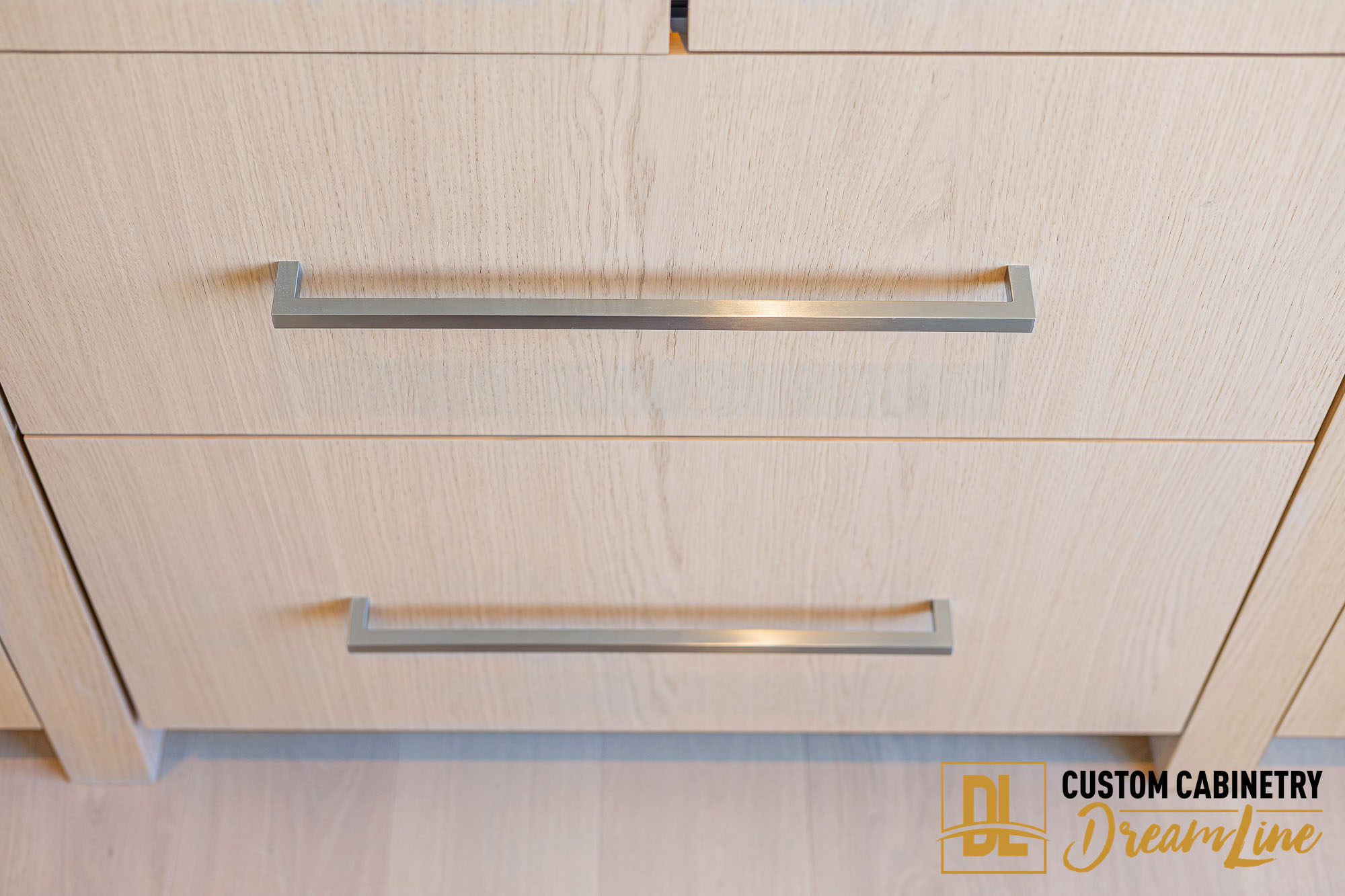
If you’re exploring modern wood finishes for your kitchen or custom cabinetry project, chances are you’ve come across Shinnoki Milk Oak. It’s one of those surfaces that feels both subtle and elevated — clean but far from cold.
But beyond good looks, what makes this finish so popular in high-end and minimalist interiors?
Let’s break it down — with data, facts, and insight from designers who rely on it to deliver warm, modern style with long-term durability. Many of these qualities are also highlighted within the broader SHINNOKI Series, which has become a staple in modern cabinetry design.
What Is Shinnoki Milk Oak?
Shinnoki is a prefinished veneer panel system known for:
-
High-quality engineered real wood surfaces
-
Consistency in grain, tone, and durability
-
A modern matte look straight from the manufacturer (no additional finishing required)
Milk Oak is one of the standout shades in the collection. It blends:
-
A soft, neutral beige-white tone
-
Subtle oak grain movement
-
Just enough texture to feel natural — without pulling too rustic
It’s a designer favorite for modern, Scandinavian, Japandi, and transitional spaces — especially when paired with concepts explored in Natural Wood Cabinets: The Secret to Timeless Kitchen Design.
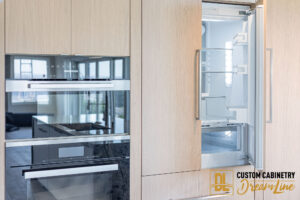
Key Benefits: What the Data Says
1. 70% Less Finishing Time
Because Shinnoki panels come prefinished, contractors and cabinetmakers report up to 70% time savings on sanding, staining, and sealing. That means:
-
Fewer errors
-
Faster project turnaround
-
More cost-efficient installations
This efficiency advantage is one reason many professionals working with DreamLine Custom Cabinetry favor prefinished engineered veneers in high-end builds.
2. 90% Color Consistency Across Panels
Compared to natural solid oak — which can vary widely in tone — Milk Oak’s engineered consistency makes it ideal for:
-
Large-scale cabinetry walls
-
Open-shelf systems
-
Multi-room cabinetry flow
Less variation = less visual noise, especially in minimalist interiors. Designers often reference this benefit when reviewing Luxury Kitchen Cabinetry Explained: Materials, Styles & Must-Haves.
3. 4x More Scratch Resistance Than Standard Veneer
Shinnoki’s finish system uses a multi-layer UV-cured coating that’s:
-
Matte (non-glossy)
-
Fingerprint-resistant
-
Scratch-resistant — perfect for busy kitchens and bathrooms
It’s been tested to outperform traditional wood veneers in both abrasion and lightfastness over time — making it a practical alternative to more delicate luxury finishes.
What Designers Love About Milk Oak
Design professionals choose Milk Oak not just for its performance — but for what it brings visually.
It’s:
-
Neutral but not sterile — pairs with whites, soft greys, and blacks effortlessly
-
Warm without being yellow — thanks to its pale beige base
-
Perfect for contrast — often used with matte black or smoked oak accents
-
A calming backdrop — ideal in open-concept homes or minimalist cabinetry setups
These attributes align closely with guidance found in Luxury Kitchen Cabinets: The Secret to a Stunning, Timeless Space.
Real-World Use: Where Milk Oak Performs Best
According to usage data from interior design firms and manufacturers, Milk Oak is most commonly used in:
-
Kitchen cabinetry (flat-panel or slab doors)
-
Bathroom vanities (paired with stone countertops)
-
Closet systems (for its clean, calming tone)
-
Wall paneling and shelving (for open-concept flow)
It’s also popular in commercial interiors, especially in wellness, hospitality, and retail — where natural tones and clean design matter most. Many of these applications appear in discussions around Luxury Kitchen Design Companies: Why Hiring One Changes Everything.
Final Thought
Shinnoki Milk Oak isn’t just a pretty surface — it’s a material that delivers on performance, longevity, and modern style. If you’re after a finish that blends high-end aesthetics with real-life practicality, this one checks every box.
No wonder it’s become a designer go-to in homes and spaces that value calm, modern, and timeless appeal.