
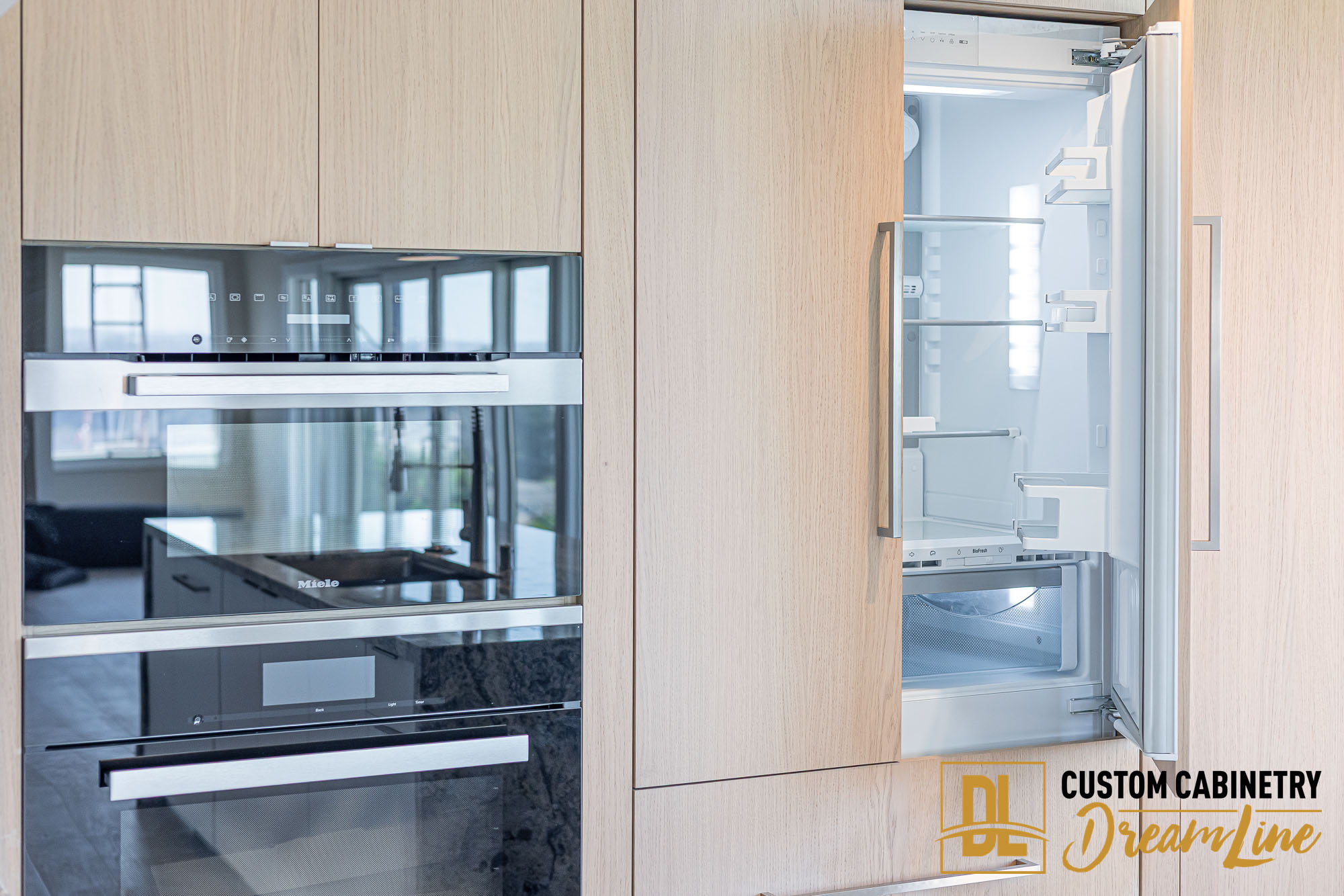
When you’re choosing materials for cabinetry or interior paneling, you want something that looks right — but also works right. That’s where Shinnoki Manhattan Oak comes into the conversation.
It’s clean, consistent, and built for modern applications — but like any material, it raises a few important questions before you commit. As part of the broader SHINNOKI Series, it’s designed to deliver both visual consistency and long-term performance.
Let’s walk through the ones that matter most.
Q: What exactly is Shinnoki Manhattan Oak?
It’s a prefinished wood veneer panel made from real oak, bonded to a stable core like MDF or plywood.
What sets it apart:
- Even, consistent color tone
- Subtle oak grain — not too rustic, not too flat
- Factory-applied finish, ready to install
That means less guesswork and fewer surprises during the build — something professionals at DreamLine Custom Cabinetry often prioritize in high-end projects.
Q: Is it real wood or just a printed surface?
It’s real wood veneer, not a print.
You’re getting:
- Authentic grain texture
- Natural variation (controlled, not random)
- The look of solid oak without the movement issues
It behaves more predictably than solid wood, especially in changing humidity — a benefit often discussed in Natural Wood Cabinets: The Secret to Timeless Kitchen Design.
Q: How durable is it for everyday use?
For most interior applications, it holds up very well.
Shinnoki Manhattan Oak panels are:
- Finished with UV-cured coatings for scratch resistance
- Less prone to warping than solid oak
- Suitable for kitchens, closets, and wall paneling
As with any wood surface, you still want to avoid heavy impact or standing moisture — but for daily use, it’s reliable. These durability factors are also covered in Luxury Kitchen Cabinetry Explained: Materials, Styles & Must-Haves.
Q: Where does it work best?
This material is versatile, but it really shines in:
- Kitchen cabinetry (especially slab or flat-panel styles)
- Built-in storage systems
- Wall paneling and feature walls
- Floating shelves or furniture elements
Anywhere you want a clean, modern oak look without heavy grain contrast — a design direction often seen in Minimalist Kitchen & Cabinets: The Art of Clean, Functional Design.
Q: Does it need additional finishing or sealing?
No — and that’s one of the biggest advantages.
Because it’s prefinished:
- No sanding or staining on site
- No drying time delays
- More consistent results across all panels
It simplifies both the build process and the final outcome — a benefit highlighted in The Ultimate Step-by-Step Guide to Custom Cabinetry: Design, Build & Install Like a Pro.
Q: How does it compare to solid oak?
Solid oak:
- Has more variation
- Can expand and contract with humidity
- Requires more finishing work
Shinnoki Manhattan Oak:
- Offers consistency and stability
- Installs faster
- Delivers a cleaner, more controlled look
If you want precision and efficiency, veneer panels often come out ahead.
Q: Is it a good long-term choice?
Yes — especially if you’re aiming for a modern, low-maintenance interior.
It’s built to:
- Hold its color over time
- Resist everyday wear
- Stay visually consistent across large installations
It’s not about trends — it’s about reliable performance and clean design, similar to what’s outlined in Luxury Kitchen Cabinets: The Secret to a Stunning, Timeless Space.
Final Thought
Shinnoki Manhattan Oak is the kind of material that does its job well — no drama, no surprises. It gives you the warmth of oak, the consistency of engineered panels, and the efficiency of a prefinished system.
If you’re building something that needs to look sharp and hold up over time, this is a solid choice to keep on your list.